What a Turkish hammam includes, how it differs from a Moroccan hammam, what you need, and a step-by-step routine to recreate the bath at home in forty minutes.
- Published
- October 12, 2026
- Reading time
- 8 min read
- Topic
- Skin & routine
- Author
- Oryvane
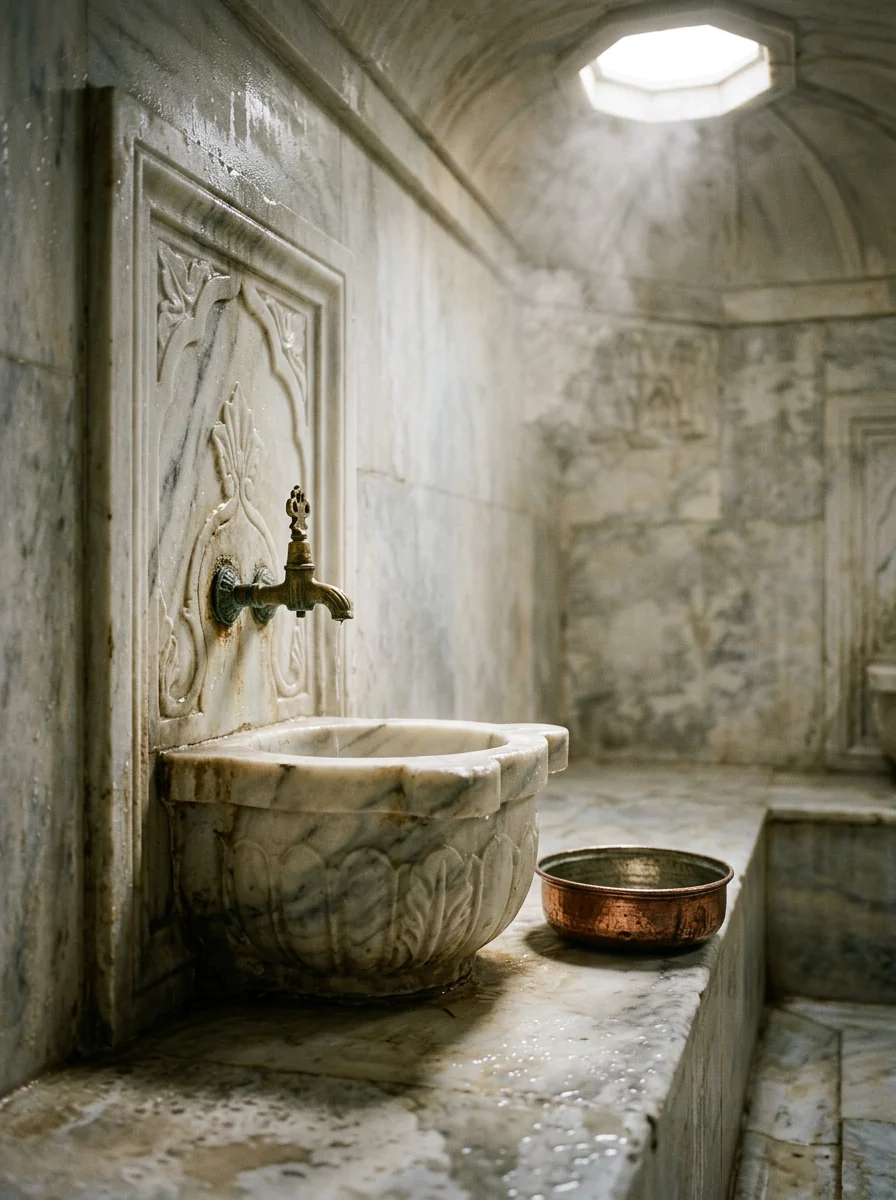
A visit to a traditional Turkish bath is one of the great unhurried pleasures. You lie on warm marble under a dome pierced with small glass stars, steam softens everything, and someone with strong hands and a rough mitt removes what feels like a whole season from your skin. You emerge lighter, slower, and cleaner than you thought possible.
Most of us do not have a hammam around the corner. The good news is that the ritual is a sequence, not a building, and the sequence travels well. This guide explains what happens in a hammam and how to recreate it at home.
What a hammam is
The hammam is the public bathhouse of the Ottoman world, a descendant of the Roman baths adapted to a culture in which washing under running water mattered. For centuries it was where a neighbourhood bathed, and also where it met: friends, gossip, celebrations before a wedding. Many historic bathhouses in Turkey are still working today.
The classic layout has three parts: a cool room for undressing and resting afterwards, a warm room for acclimatising, and the hot room at the centre, with a heated marble platform in the middle and stone basins around the walls. Bathers scoop warm water from the basins with a metal bowl and pour it over themselves.
The four stages
| Stage | In the hammam | What it is for |
|---|---|---|
| 1. Heat | Lying on the warm marble platform | Softens the skin and relaxes the muscles |
| 2. Scrub | A firm rub with a kese, a rough woven mitt | Lifts away dead surface skin |
| 3. Wash | A cloud of soap foam, then bowls of water | Cleans and soothes the freshly scrubbed skin |
| 4. Rest | Wrapped in towels in the cool room, with tea | Lets the body cool slowly; the best part |
Everything in the home version follows this order. Heat first, scrub second, wash third, rest last. Rearranging the steps is the most common reason a home attempt disappoints.
What you need
- A bathroom you can make warm and steamy. A bath is ideal; a shower works.
- An exfoliating mitt. A traditional kese is a flat mitt of rough woven fabric. Buy one that is clean and new, and keep it for your own use.
- A good bar of soap. An olive oil bar, ideally with laurel, is the traditional choice.
- A bowl or jug for pouring water, if you have a bath.
- Two towels, one for your body and one for your hair, and a robe.
- Something to drink afterwards. Tea is traditional; water is essential.
- Forty minutes in which nobody needs you.
Step by step
First, warm the room. Close the door and window and run hot water for a minute or two so that the air turns soft and steamy. Lay out your towels and robe where you can reach them.
Then soak. Sit in a warm bath, or stand under a warm shower, for ten minutes. Use no soap yet. This is the stage people skip, and it is the one that makes the rest work: skin must be warm, wet and softened before it is scrubbed. If you soap first, the mitt slides and does nothing.
Now the scrub. Step out of the water stream or lift a limb out of the bath. Wet the mitt, wring it out, and rub your skin in long, firm strokes, moving from your ankles and wrists towards your heart. Do the limbs first, then the back and shoulders, with a lighter touch on the stomach and chest. After a few strokes you will see small grey rolls appear on the skin. That is the dead surface layer coming away, and it is entirely normal. Do not use the mitt on your face, on broken or sunburnt skin, or anywhere it hurts.
Rinse thoroughly with warm water to wash the scrubbings away.
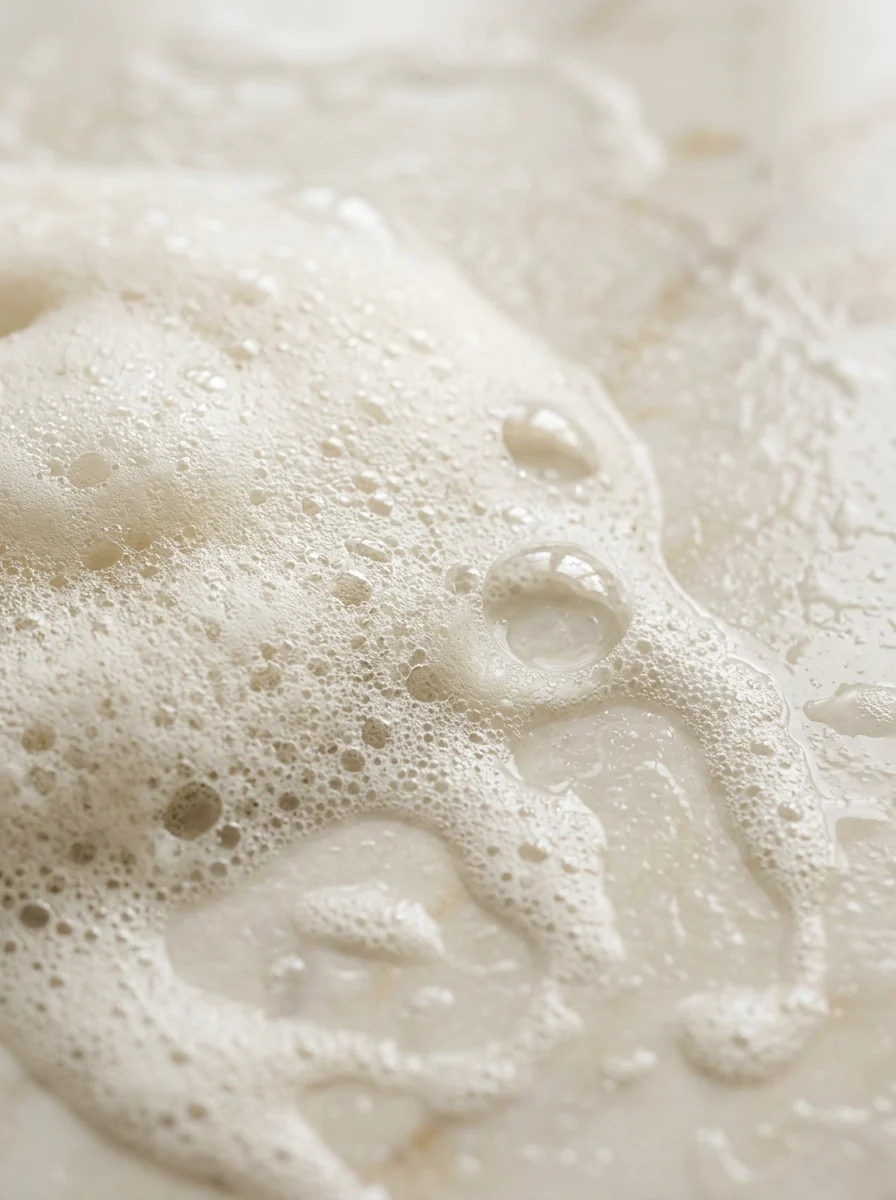
Then wash. Work the soap into a rich lather on a soft cloth or in your hands and cover yourself from the shoulders down in slow circles. In a hammam this is done with a cloth bag whipped into a great cloud of foam; at home, a generous lather does very nicely. Wash your face gently with your fingertips. Take your time. Rinse with bowl after bowl of warm water, or under the shower, until the skin feels clean and smooth.
Finish, if you like, with a cooler rinse. It need not be cold, only a few degrees below what you have been using.
Finally, rest. Wrap yourself in a towel and a robe, sit or lie down somewhere comfortable, and do nothing for at least ten minutes. Drink water or tea. Once you have cooled, apply a moisturiser or a little body oil; freshly scrubbed skin drinks it in.
How often
The full ritual, with the scrub, is something to do about once a week, or every two weeks if your skin is dry or delicate. More often than that is too much exfoliation. On other days, the wash and the rest are a fine ritual by themselves.
Take care
- Heat is not for everyone. If you are pregnant, or have a heart condition, low or high blood pressure, or any illness affected by heat, ask your doctor first and keep the water warm rather than hot.
- Stand up slowly after a hot bath. Feeling light-headed is a sign to cool down and drink water.
- Do not scrub skin that is sunburnt, broken, freshly shaved or affected by eczema or psoriasis.
- Be gentle the first time. The aim is smooth skin, not red skin.
- Wash the mitt after each use, let it dry completely, and replace it when it becomes soft.
Why it is worth forty minutes
The scrub leaves skin smoother than any shower gel can, and moisturiser applied afterwards goes further. But the deeper benefit is the one the bathhouse has always offered: an agreed stretch of time in which the only task is to be warm and clean. That is rare enough now to be worth protecting once a week.
Turkish and Moroccan hammams: what is the difference?
| Turkish hammam | Moroccan hammam | |
|---|---|---|
| Setting | Domed marble rooms around a heated central platform | Tiled steam rooms, often simpler |
| Soap | Olive oil soap, whipped into a cloud of foam | Beldi black soap, a soft olive paste |
| Scrub | Kese mitt on softened skin | Kessa mitt after the black soap has rested on the skin |
| Extras | Foam wash, water poured from bowls | Often rhassoul clay and argan oil |
The sequence is the same in both: heat, scrub, wash, rest. Only the products differ, and the home ritual in this guide follows the Turkish version.
Hammam etiquette, if you visit one
- Bathers are usually given a pestemal, a thin cotton wrap, and keep it on in mixed or public areas.
- Many hammams have separate hours or sections for men and women; check before you go.
- Bring or buy your own kese if you prefer, and tell the attendant if you would like a gentler scrub.
- Drink water before and after. Heat dehydrates more than people expect.
A kit for the hammam at home
- Olive oil or olive and laurel soap.
- A kese mitt.
- A large cotton pestemal or towel and a robe.
- A metal or ceramic bowl for pouring water, if you have a bath.
- Moisturiser or a light body oil for afterwards.
A short history of the hammam
The hammam grew out of the bathhouses of the Roman and Byzantine world. Where Roman baths often centred on plunging into pools of cold, warm and hot water, the hammams that developed across the Islamic world favoured steam and running water, reflecting the importance of washing under flowing rather than still water. The result was the arrangement still found today: a cool room, a warm room, and a hot room with a heated marble platform and basins fed by taps.
Under the Ottomans the hammam became an architectural showpiece. Great architects designed bathhouses alongside mosques and markets, with domes pierced by small glass skylights that scatter light through the steam. Bathhouses were built in pairs or with separate hours for men and women, and they were part of daily and civic life rather than a luxury.
They were also social spaces. Friends met there, news and gossip travelled there, and important life events were marked there, most famously with gatherings before a wedding. For women in particular, the hammam was for centuries one of the main places to meet outside the home.
Many historic hammams in Turkey are still working, some after careful restoration, and visiting one is a good way to understand the ritual before you recreate it at home. Go once, notice the order of things and how unhurried it all is, and the bathroom version in this guide will make immediate sense.
The ritual is a sequence, not a building. Heat first, scrub second, wash third, rest last.
Frequently asked questions
What does a Turkish hammam include?
Time in a hot, steamy room, a scrub with a kese mitt, a wash with olive oil soap foam and water, and a rest afterwards in a cooler room.
How do I do a hammam at home?
Steam up the bathroom, soak in warm water for ten minutes, scrub with a kese, wash with olive oil soap, rinse, then rest wrapped up and moisturise.
What is the difference between a Turkish and a Moroccan hammam?
The steps are similar. Turkish hammams use olive oil soap foam; Moroccan hammams use black olive soap paste and often clay.
Do you wear clothes in a Turkish hammam?
Bathers usually wear a thin cotton wrap called a pestemal, or swimwear, depending on the hammam.
How often should I do a hammam scrub at home?
About once a week, or every two weeks for dry or sensitive skin.
Can I do the ritual in a shower?
Yes. Steam up the room, stand under warm water for ten minutes, step out of the stream to scrub, then wash and rinse.
Heat, scrub, wash, rest. A bathhouse in forty minutes.
Keep reading
All articles
Skin & routine · 7 min read
The best bar soap for dry skin, and how to choose one for every skin type
Skin & routine · 8 min read
Bar soap vs body wash: which is better for your skin, body odour and the planet?
Skin & routine · 7 min read