What Aleppo-style olive and laurel soap is, its benefits for skin, face and hair, how laurel percentage changes a bar, whether you can use it every day, and how to spot an authentic one.
- Published
- October 12, 2026
- Reading time
- 9 min read
- Topic
- Ingredients
- Author
- Oryvane
Long before soap came in plastic bottles, the bathhouses of the eastern Mediterranean were supplied with plain, heavy bars made from the oils that grew nearby. Olive oil gave the bar its body. Laurel oil, pressed from the fruit of the bay tree, gave it its character. The combination is still made today, and still associated with the hammam.
This article looks at where that pairing comes from, what each oil contributes, and how to tell a carefully made bar from an imitation.
A tradition older than the word soap
The region around the Levant is one of the places where hard bar soap, as distinct from soft soap pastes, is thought to have been made at scale for a very long time. Olive trees and bay laurel grow side by side there, and soap makers used what the land offered. The city of Aleppo gave its name to the best-known version: a bar of olive oil with a share of laurel oil, boiled in large vats, poured out onto the floor to set, cut by hand and stacked in towers to dry for months.
From there the idea travelled with trade. Soap makers elsewhere around the Mediterranean adapted it to their own oils, and plain olive oil bars became the staple of public baths across the region. When people speak of hammam soap today, this is the family they mean.
What the hammam asked of a soap
A traditional bathhouse visit is long, warm and wet. Heat and steam soften the skin; the body is then scrubbed with a rough mitt and washed. A soap for that setting had to do a few things well.
- Stay firm in a hot, humid room without turning to paste.
- Give a dense lather that clings to the skin and the wash cloth rather than flying away as foam.
- Rinse cleanly, so that skin emerges feeling scrubbed but not tight.
- Carry a clean, natural scent that suits a shared space.
An olive oil base, hardened by a long cure and sharpened by laurel, meets all four. That is practical craft, not mystique.
Olive oil: the body of the bar
Olive oil makes one of the mildest of all true soaps. Its lather is low and creamy rather than big and airy, and it rinses away without the stripped feeling harsher soaps can leave. It is also slow: an olive oil bar is soft when it is first cut and needs time, often many weeks and traditionally many months, to become properly hard.
That slowness is why well-made bars cost more than their short ingredient list suggests. What you are paying for is patience.
Laurel: the character
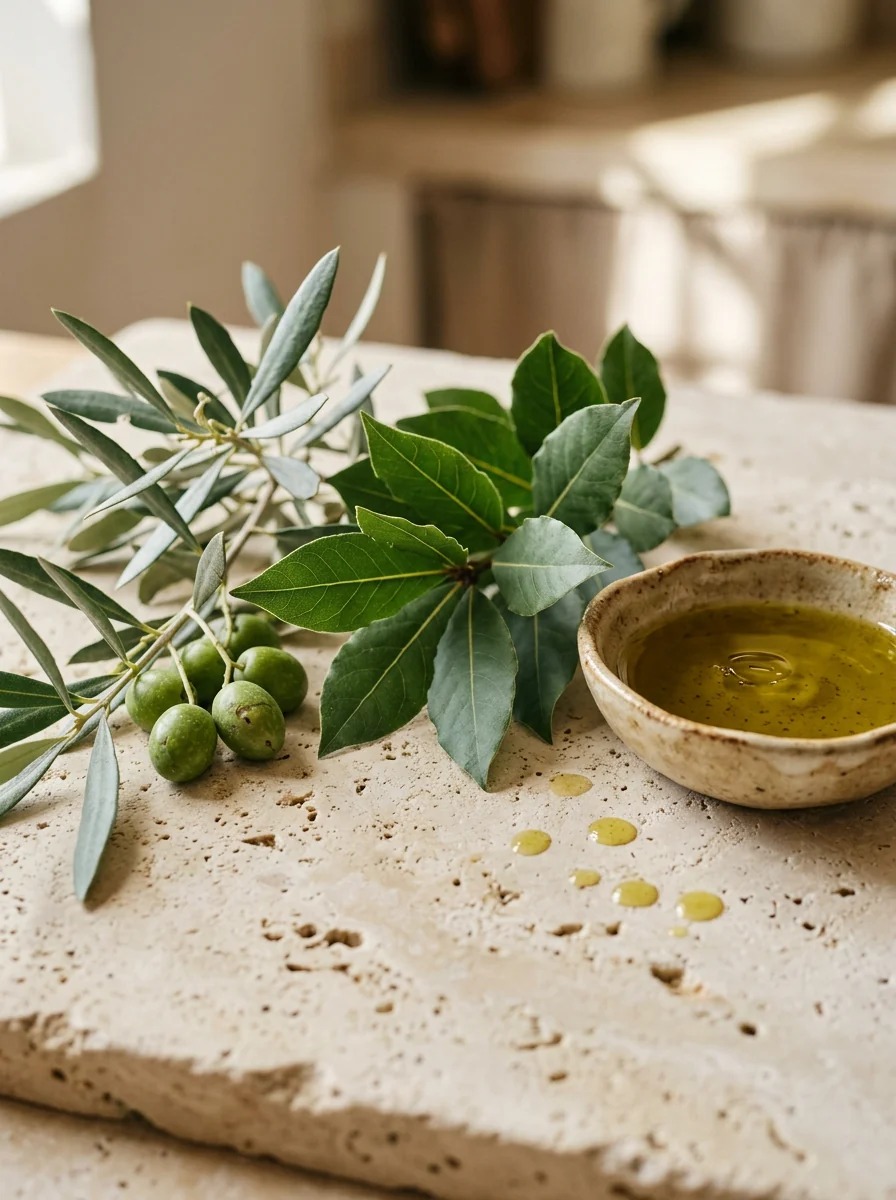
Laurel oil is green, thick and resinous, with a scent somewhere between bay leaf, pine and something faintly medicinal. A small amount is enough to change a bar. It deepens the colour, adds a distinctly clean note to the smell, and gives the lather a slightly firmer, more clarifying feel.
Traditional makers grade their soap by how much laurel it contains. A bar with a small share is the everyday choice: gentle, lightly scented and suitable for most people. Bars with a high share are stronger in every sense, including on the skin, and are usually kept for the body rather than the face.
One caution: laurel is a botanical with a real scent, and a small number of people are sensitive to it. If you know you react to bay or to fragranced products in general, try a new bar on a small area first.
How the oils work together
| Olive oil | Laurel oil | Coconut oil (when added) | |
|---|---|---|---|
| Role in the bar | The base | The character | The helper |
| Lather | Low and creamy | Firms it up | Makes it bigger and quicker |
| Scent | Faint, clean, green | Herbal, resinous | Almost none |
| Effect on the skin | Mild | Clarifying; stronger at high shares | Strong cleansing; drying if overused |
| Typical share | The great majority | A small part | A small part |
Many modern bars in this family add a little coconut oil, as ours does. It is not part of the oldest recipes, but it solves two practical problems: it helps the bar harden sooner and it gives a more generous lather in hard water. Used with restraint, it keeps the mildness of the olive oil intact.
How to recognise a good bar
- The ingredient list is short. Olive oil first, laurel named explicitly, and little else.
- The colour is natural. Depending on the oils and the age, bars range from pale cream to olive green. A traditional long-cured bar may be golden outside and green within. Vivid, uniform colour suggests dye.
- The scent is quiet. You should smell oil and bay, not perfume.
- It feels heavy and hard for its size. A light, soft bar is young or padded with fillers.
- The maker tells you how it was made and how long it cured.
Using it the bathhouse way
You do not need marble and a dome. Take a warm shower or bath and give your skin a few minutes in the heat before you reach for the soap. Work the bar into a rich lather in your hands or on a cloth and wash in slow circles. Rinse thoroughly with warm water, then finish with a cooler rinse if you enjoy it.
Once a week, add the scrub: after soaking, use an exfoliating mitt on damp skin before the final wash. It is the step that makes the ritual feel like a bathhouse rather than a shower. We describe the full routine in our guide to the hammam ritual at home.
What the laurel percentage means
Olive and laurel bars are often sold with a number such as 5, 20 or 40 percent. It refers to the share of laurel oil among the oils, and it changes the bar noticeably.
| Laurel share | Character | Usually suits |
|---|---|---|
| Around 5 to 12% | Gentle, lightly scented | Daily use, most skin types, the face |
| Around 15 to 25% | Balanced, more clarifying | Normal to oily skin, body and face |
| 30% and above | Strong, resinous, deeply cleansing | Oily skin, the body, occasional use |
If you are new to this kind of soap, start low. You can always move to a stronger bar; it is harder to undo an irritated face.
Benefits for face and hair
On the face, a low-laurel bar is a classic simple cleanser: a dense lather, a clean rinse and a faint herbal scent. Those with oily or combination skin often like the slightly clarifying feel. On hair, olive and laurel soap has a long traditional use, especially for short or oily hair, but true soap can leave a dull film in hard water. Rinse thoroughly and follow with a dilute vinegar or citric rinse if you try it.
Can it help with body odour?
Body odour comes from bacteria breaking down sweat. Washing removes both the sweat and much of the bacteria, so any good soap used regularly helps. Olive and laurel soap is popular for this because it gives a thorough, satisfying clean and has a fresh herbal scent of its own, but it does not replace a deodorant or antiperspirant for those who need one.
Side effects and who should be careful
Most people use olive and laurel soap without any problem. The usual cautions apply: it is alkaline, as all true soap is; laurel is a fragrant botanical to which a small number of people are sensitive; and high-laurel bars can feel drying on dry or delicate skin. Patch test on the inside of your forearm for a couple of days if you react easily to scented products, and stop if you notice redness or itching.
Authentic or imitation?
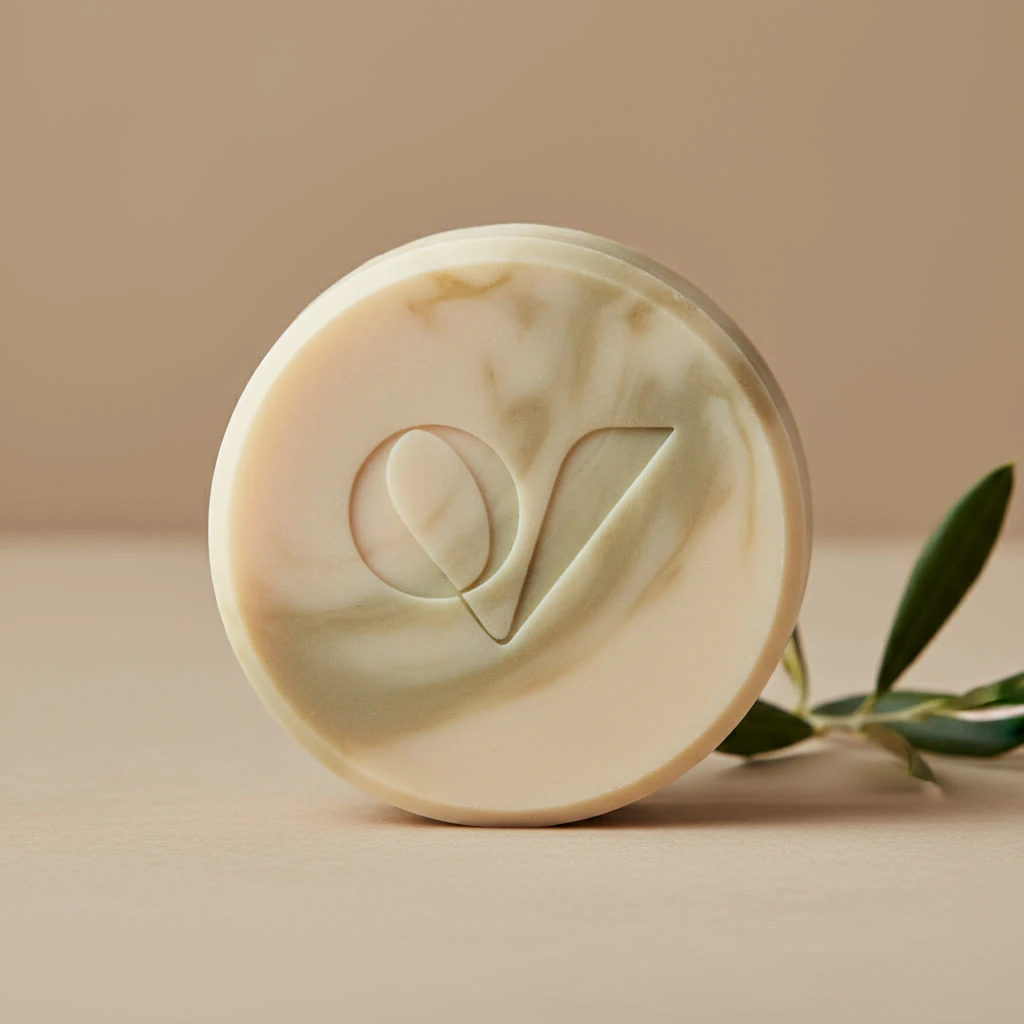
The word Aleppo is used widely, and not every bar sold under it follows the traditional method. A traditionally made bar is typically cut by hand, stamped with the maker's seal, and aged for many months, which gives it a golden or tan outside and a greener inside. Look for olive oil and laurel oil named clearly in the ingredients and for some honesty about where and how the soap was made. Our Turkish Hammam Pure Bar belongs to the same olive and laurel family, made in our own way, and we describe it as such rather than borrowing a city's name.
How olive and laurel soap is aged
The traditional method explains the look and feel of the best bars. Olive oil and an alkali are boiled together in large vats for several days until the soap forms. Laurel oil is added towards the end. The hot soap is then poured out onto a clean floor lined with paper, levelled into a broad sheet, and left to set for a day or two. Workers walk across it on wooden boards to cut it into blocks, and each block is stamped with the maker's seal.
Then the waiting begins. The bars are stacked in hollow towers, with gaps between them so that air can circulate, and left to dry. Traditional makers age their soap for many months, sometimes longer. Over that time the outside of the bar oxidises from green to golden or tan while the inside stays green, the bar loses water and becomes very hard, and the lather becomes milder and longer-lasting. It is common to see a bar's age printed alongside its laurel percentage.
Modern makers, including us, use other methods and shorter timelines, and a carefully made cold-process bar with olive and laurel oils will not look exactly like a long-aged traditional block. What carries across is the principle: good olive soap rewards patience. A bar that has had time to cure is harder, gentler and lasts longer in the dish than one sold the week it was made.
If you buy a traditionally aged bar, expect it to be heavy, hard enough to resist a fingernail, and slow to lather at first. Wet it well, work it between your hands for a little longer than you would a modern soap, and the dense, clean lather will come.
The recipe has survived because it is short. When there is so little in a bar, each part has to be good.
Frequently asked questions
What are the benefits of Aleppo soap?
A traditional olive and laurel bar cleans gently but thoroughly, has a short natural ingredient list and a fresh herbal scent. Low-laurel bars suit most skin types; higher-laurel bars feel more clarifying.
Can I use Aleppo soap every day?
Yes, most people can use a low to medium laurel bar daily on face and body. If your skin feels dry, switch to a lower laurel share or use it every other day.
Can Aleppo soap remove body odour?
Regular washing with any good soap removes sweat and much of the bacteria that cause odour. Olive and laurel soap is popular for this, but it is not a deodorant.
What is the healthiest soap you can use?
For most people, a mild soap with a short ingredient list and little added fragrance. Olive oil based bars, including olive and laurel, are a common choice.
Are there side effects of laurel soap?
It is well tolerated by most people. Those sensitive to fragrant botanicals may react to laurel, and high-laurel bars can dry delicate skin. Patch test if unsure.
What is hammam soap made of?
Traditionally olive oil, often with laurel oil. Modern versions may add a little coconut oil for a firmer bar and richer lather.