What activated charcoal soap is good for, its disadvantages and side effects on face and body, whether you can use it daily, and the claims (like skin whitening) it can't back up.
- Published
- October 12, 2026
- Reading time
- 7 min read
- Topic
- Ingredients
- Author
- Oryvane
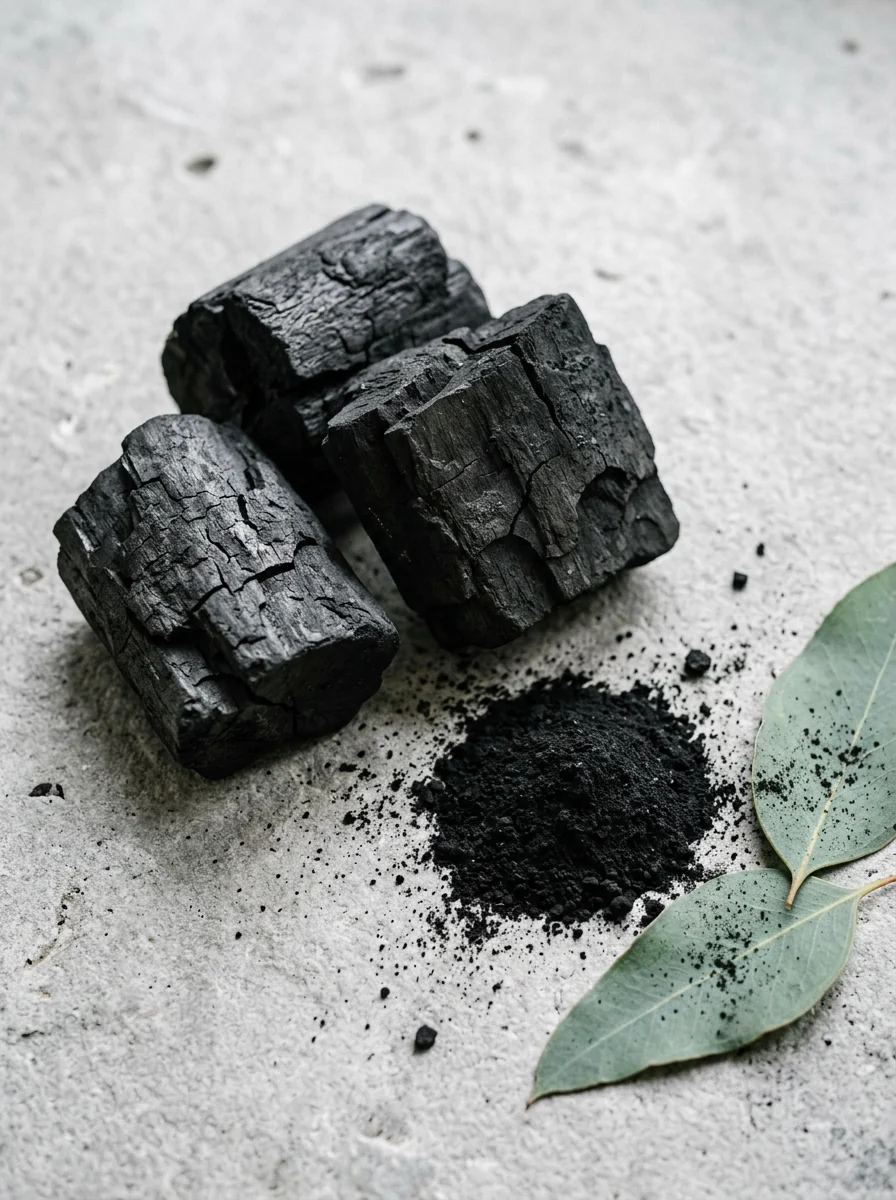
Few ingredients have had a decade like activated charcoal. It has turned up in toothpaste, face masks, lemonade and, most sensibly, soap. A black bar on a white basin looks striking, and many people love how their skin feels after using one. The marketing around charcoal, however, often runs well ahead of the evidence.
Here is a plain account of what activated charcoal is, what it plausibly does in a soap, and how to use a charcoal bar so that it helps rather than dries.
What activated charcoal is
Charcoal is carbon, made by heating plant material such as wood, coconut shell or bamboo with very little air. Activating it means treating it at high temperature with steam or gas so that the carbon becomes riddled with microscopic pores. The result is a powder with an enormous internal surface area for its weight.
That surface is what makes it useful. Many substances stick to it, a process called adsorption, with a d: molecules cling to the surface rather than soaking into the material. This is why activated charcoal is used in water filters, air filters and certain medical settings.
What it does in a bar of soap
It is tempting to assume that charcoal in soap behaves as it does in a filter, pulling oil and impurities out of the pores. The honest position is that this has not been well demonstrated for rinse-off products. In a bar, the charcoal is already surrounded by soap and oils, and it is on your skin for a matter of seconds.
What charcoal reliably contributes is more modest, and still worthwhile.
- A very fine, gentle physical polish. The particles are tiny, and as you lather they give the faintest sense of exfoliation without the scratch of a scrub.
- A particular feel. Charcoal bars tend to leave skin feeling notably clean and matte, which is exactly what oilier skin types are looking for.
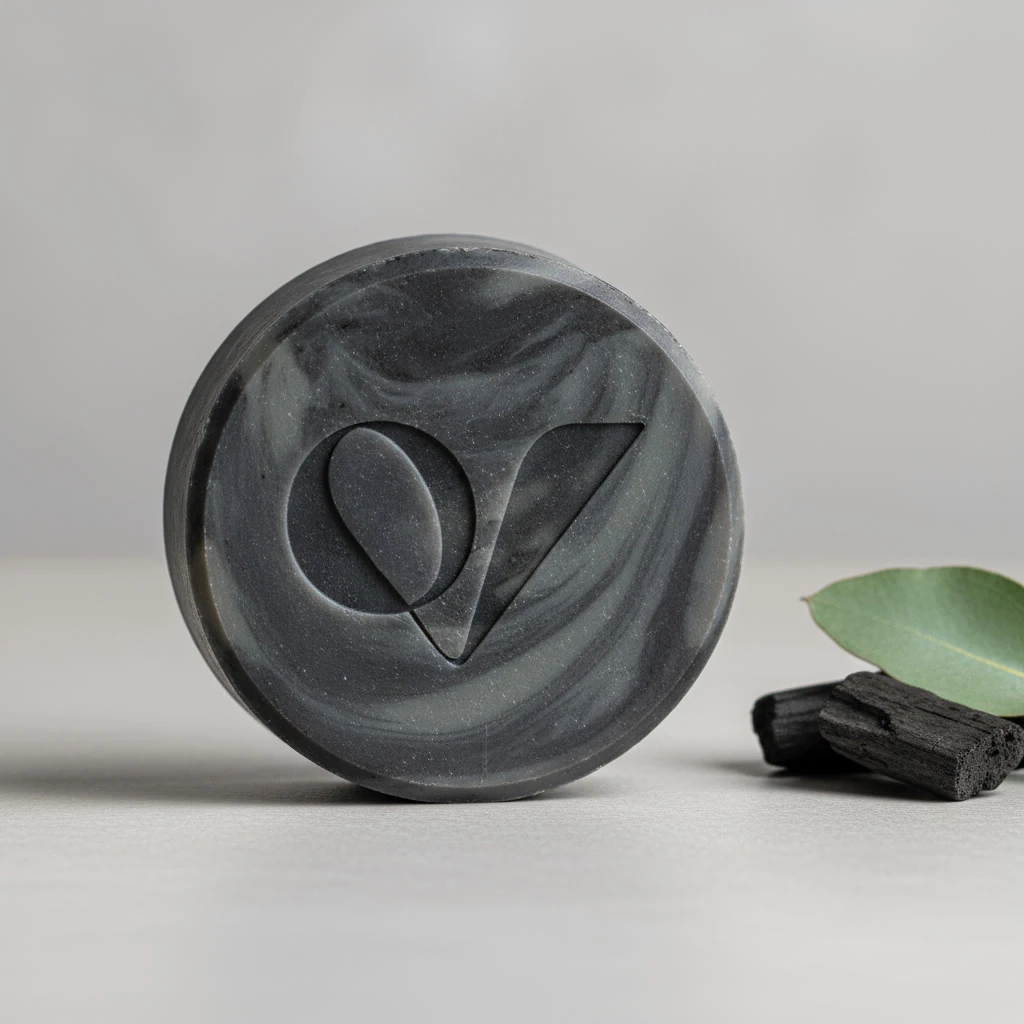
- Colour without dye. The deep grey to black of a charcoal bar comes from the charcoal itself.
- No scent of its own. Charcoal is odourless, so the bar smells only of its oils and any botanicals added.
In other words, the soap does the cleaning, as soap always does. The charcoal shapes how that cleaning feels.
The word detox
Charcoal products are often labelled detox, and our own bar carries the word in its name as a nod to that deep-clean feeling. It is worth saying plainly what it does and does not mean. A soap does not remove toxins from the body; your liver and kidneys take care of that. What a charcoal bar removes is what any good soap removes: sweat, excess oil, sunscreen, the grime of a city day. If your skin feels clearer afterwards, that is the reason.
Who tends to enjoy charcoal soap
| Skin or situation | How a charcoal bar fits |
|---|---|
| Oily or combination skin | The classic match. Many people like it daily on the body and a few times a week on the face. |
| After exercise or a hot day | A satisfying deep clean when skin feels sticky. |
| Normal skin | Good as an occasional bar alongside a milder everyday soap. |
| Dry or sensitive skin | Use sparingly, or choose a milk or olive oil bar instead. |
| Persistent acne | A clean, non-greasy feel can help comfort, but it is not a treatment. See a dermatologist. |
How to use it
Lather the bar between wet hands or on a soft sponge, apply in gentle circular motions, and rinse thoroughly. On the face, keep it brief and avoid the eye area.
Frequency depends on your skin. Normal skin is usually happy with once a day; oilier skin may enjoy twice. If your skin starts to feel tight or looks flaky, you are overdoing it: drop back, and alternate with a gentler bar. Following with a light moisturiser is sensible for everyone, including people with oily skin, because skin that is stripped tends to respond by producing more oil, not less.
Practical notes on a black soap
- The lather is grey, not black, and rinses clean from skin.
- It can leave marks on pale grout, natural stone and light face cloths if residue is left to dry. Rinse the basin and use a darker cloth.
- Keep it on a draining dish. A soggy charcoal bar leaves a grey puddle.
- Subtle marbling and variation in shade from batch to batch are normal in handmade bars.
How to choose a good one
Look for activated charcoal named in the ingredient list, sometimes written as charcoal powder, rather than a black colourant standing in for it. The base matters as much as the charcoal: a bar built on olive and other plant oils will clean thoroughly without being harsh, whereas a harsh base with charcoal added is simply a harsh soap that happens to be black.
And be wary of anything that promises to shrink pores, draw out toxins or cure blemishes. Pores do not open and close, and soap does not treat disease. A maker who tells you what the bar is made of, and stops there, is giving you the more useful information.
Disadvantages and side effects of charcoal soap
Charcoal soap is safe for most people, but it is more likely than a milk or olive oil bar to leave skin feeling dry, because it is chosen for a deep, matte clean. The most common problems are tightness, flaking and redness from using it too often or on skin that was already dry. On the face, rubbing the bar directly on the skin, or using it alongside other strong products such as exfoliating acids or retinoids, adds to the risk. Black residue on pale towels, grout and natural stone is a practical nuisance rather than a side effect, but worth knowing about.
If you notice persistent dryness or irritation, reduce to a few times a week, use a gentler bar in between, and moisturise. Stop if your skin stings or becomes inflamed.
Charcoal soap on the face
Many people with oily or combination skin like charcoal soap on the face, particularly on the forehead, nose and chin. Lather it in your hands rather than rubbing the bar on your skin, keep away from the eyes, wash for no more than about thirty seconds and rinse thoroughly. Start with three evenings a week and increase only if your skin stays comfortable.
Is charcoal soap good for acne?
It is often marketed for acne, and it can be a pleasant cleanser for oily, breakout-prone skin because it rinses clean without a greasy feel. There is, however, little direct evidence that the charcoal in a soap reduces acne. Over-washing and harsh scrubbing tend to make breakouts worse, so gentleness matters more than the bar's colour. For persistent acne, a dermatologist can recommend treatments that work.
Does charcoal soap whiten skin?
No. This claim appears often in searches and on some labels, and it is not true. Charcoal soap cleans the surface of the skin; it does not change skin colour or remove pigmentation. Feeling brighter after a thorough wash is simply clean skin. Products sold to lighten skin can be harmful, and we would not recommend chasing that effect with soap or anything else.
Charcoal soap for the back, chest and after the gym
Some of the most popular uses of charcoal soap have nothing to do with the face. The back, chest and shoulders have plenty of oil glands, sweat easily and are often covered by tight clothing, which is why they are common places for clogged pores and the occasional breakout. A charcoal bar used on these areas in the shower gives the thorough, matte clean that many people find satisfying, without the risk of over-drying the more delicate skin of the face.
After exercise, timing matters as much as the soap. Shower as soon as you reasonably can, rather than sitting in damp clothes, and wash the areas that were covered by your kit. Lather the bar on a wash cloth or loofah for the back, rinse thoroughly, and dry well. If you train every day, alternate the charcoal bar with a milder one so your skin does not become dry or irritated.
For men who shave, charcoal soap can be a pleasant pre-shave wash to remove oil and sweat, but it is usually too drying to use as a shaving soap itself. Follow the shave with a mild, fragrance-free moisturiser.
And if you are dealing with persistent spots on the back or chest, see a doctor or dermatologist. Body acne responds well to proper treatment, and a good soap is a supporting player rather than the cure.
The soap does the cleaning. The charcoal shapes how that cleaning feels.
Frequently asked questions
What is activated charcoal soap good for?
A thorough clean with a matte finish, which oily and combination skin types particularly enjoy. It removes oil, sweat and grime like any good soap, with a very fine gentle polish from the charcoal.
What are the disadvantages of charcoal soap?
It can be drying if used too often or on dry skin, and it can mark pale towels and stone. Some people find it too strong for the face.
Is it good to use charcoal soap daily?
Many people with normal to oily skin use it daily on the body. On the face, start with a few times a week and moisturise afterwards.
Is activated charcoal good for your skin?
In soap it is generally safe and gives a deep-clean feel. Claims that it detoxifies skin or draws out impurities are not well supported for rinse-off products.
What are the side effects of charcoal soap on the face?
Dryness, tightness, flaking or redness, usually from overuse. Reduce frequency, use a gentler bar in between and moisturise.
Does charcoal soap whiten skin?
No. It cleans the skin surface but does not change skin colour or remove pigmentation.